

When Healing Means Carrying What Won’t Go Away
Not every wound closes. Some just become part of our story.
Hey, checking in, because the quiet stuff matters too. Today’s reflection: maybe healing isn’t about letting go. Maybe it’s about learning to live with what stays.
I used to think grief had an ending. You move through the stages, you cry, you try to grow, and eventually you expect to wake up lighter. You go back to work, maybe laugh at something small, and people say it’s good to see you smile again. That’s the version we’re taught to hope for: the return, the comeback, the clean next chapter.
But in truth, most grief doesn’t end. Some losses stop feeling foreign, that’s all. They settle beside you, familiar and quiet, until you can’t tell where the ache ends and the living begins.
The myths we tell about healing
We love stories that promise closure. Every movie, every book, every casual talk about pain seems to end the same way. There’s a reason, a lesson, or at least a clean line between “before” and “after.”
But you don’t have to bounce back. Some things change you in ways that are not meant to be undone. The point isn’t to erase the break. It’s to learn how to live with the crack still visible. That’s the part no one really says out loud.

Grieving in the age of never-ending feeds
Loss feels lonelier now. Your chest is heavy. The phone buzzes again. You peek. Someone is smiling in a photo. You don’t even know why it hits you.
Everything keeps moving online. Social feeds just keep going, and you scroll along without really seeing. Grief doesn’t follow any of that. It refuses to be neat or pretty. You can’t sum it up or make it look good for anyone else.
Still, here we are, existing inside screens that never pause. Even when your heart wants silence, the noise keeps going. That contrast can make sadness feel like failure. But grief isn’t a mistake. It’s proof that you loved deeply.
The false urgency to move on
Lately, wellness advice makes pain feel like a task. People talk about transforming it or rewriting it, and at first, it almost sounds hopeful. But then it hits differently. And then you wonder if there’s a schedule for grief. Like maybe you’re behind. And then you wonder if there’s a schedule for grief. Like maybe you’re behind. And it just… feels heavier.
Sometimes… the most honest thing is just admitting that it still hurts. You still wait for a message that won’t arrive. You still talk to the absence because silence feels too final.
When self-care starts to feel like work, that’s usually when you realize healing has turned into performance. You don’t need to manage your grief. You only need to live with it long enough to understand its rhythm.
You can be healed without feeling healed
Healing rarely looks like joy. Sometimes it looks like remembering without breaking. Or laughing again and then feeling guilty for it. Or realizing you slept through the night and dreamed about them but didn’t wake up in tears.
You can be… healed. Even… if it doesn’t really feel like it. The ache… still somewhere, I guess. It becomes part of your inner map, a familiar landscape. You know the rough patches. Somehow, you move through them more gently.
Grief… it teaches you a kind of fluency with feelings. You know, like sadness can be there. And gratitude too. At the same time, somehow. Missing someone doesn’t erase peace. You stop measuring recovery by how little you cry and start noticing how fully you feel without falling apart.
The quiet moments nobody talks about
Most people notice grief in the obvious moments. The funeral. The first anniversary. That post thanking everyone for their support. But grief doesn’t stop there. It shows up later, in ways you don’t expect. The first holiday without them hits differently. You find a voicemail. You can’t bring yourself to delete it. A smell in a store aisle. Stops you mid-step.. No one sees these moments, but they can take your breath anyway.
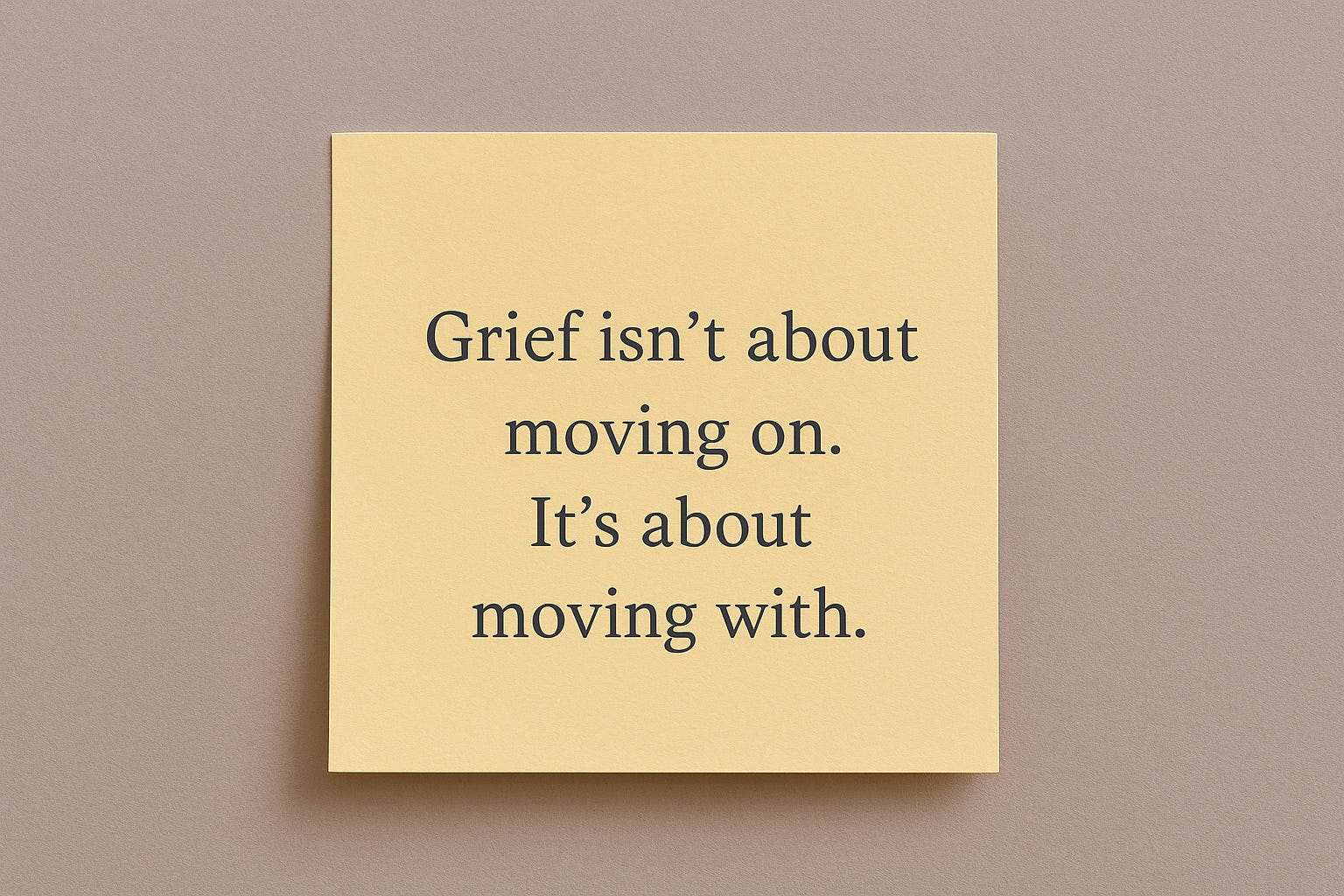
People talk about moving forward, like that’s the goal. But sometimes you just stay still. For a bit. Maybe that’s the kindest thing you can do.. Healing doesn’t always mean anything like progress. Sometimes it means patience.
The evolution of carrying
Over time, grief changes shape. It moves from being an intruder to being a companion. You stop waiting for it to go away. You start figuring out how to live with it instead. The weight, it doesn’t really get lighter. But somehow, your body, your mind, learn to carry it differently.
Some days it still catches you off guard. A song, a scent, a season. The ache comes without warning. And instead of trying to push it away... you let it be there for a while. You pour a cup of coffee. You say quietly, “You’re still here.” And that’s enough. That’s healing too.
What we lose when we rush to recover
When we chase closure too quickly, we shrink the meaning of what we’ve loved. Some experiences don’t get tidied up. They just stay open. Not like wounds. More like reminders of how much we can feel.
Trying to erase pain also erases the evidence of care. Love leaves residue, and that residue deserves to exist. Healing doesn’t require pretending it never mattered. It asks for respect instead of repair.
It’s alright to miss what shaped you. It’s alright to revisit old memories without calling it regression. You’re not stuck in the past. Just honoring the part of you that remembers. The part that holds on.
Gentle ways to live beside the ache
Try saying it out loud. Sometimes pain softens. Sometimes it doesn’t. But saying it… helps, in a way. Let it have a voice.
Notice small joys. Real healing lives in tiny moments, like the first laugh that surprises you or a morning that feels light again.
Let meaning find you. Sometimes… love itself is enough.
Invite others in. You don’t have to be strong alone. Grief stays. But… it feels a little less lonely when someone else is there.
Keep something sacred. A ritual. A song. A walk. Memory… it belongs to the healing, somehow.
What healing really asks of us
Grief isn’t a detour from life. It’s part of it. The people you’ve lost still live in your voice, your choices, your quiet moments. They exist in the kindness you show and the softness you now carry.
Healing doesn’t mean letting them go. It means letting go of the idea that you should ever stop missing them. You start to live around the absence instead of against it. Over time, that becomes peace.
You might notice your growth starting to feel like a performance. Just remember, you don’t owe anyone proof. Not of recovery. Not of anything at all. You don’t have to post about it or make it poetic. You only need to be honest. Some emotions don’t fade; they take new forms.
Eventually you’ll notice something subtle. You’ll hear their name and no longer flinch. You’ll tell a story about them and smile more than you ache. You’ll see the memory not as a wound but as a window, proof that love leaves something worth keeping.
That’s what it means to carry what stays.

One thing that grounded me: alphabetizing my spice rack even though I only cook three dishes. Order feels like peace sometimes.
One thing that ungrounded me: opening a bag of pretzels and realizing it was 80% air. Felt like a metaphor I didn’t ask for.
Your turn: what’s something in your life that never got lighter, but became easier to hold?
If you’re new here, welcome to Joydify, your soft landing for the quiet stuff that matters.
Thanks for subscribing to Joydify and sharing a quiet moment with us. Here’s to gentle support, one check-in at a time.