

When the Reset Starts to Feel Like Pressure — New Year Resolutions
Why the new year doesn’t always need a clean slate.
Hey, checking in, because the quiet stuff matters too. Today’s reflection: when the idea of a fresh start begins to feel less like relief and more like an expectation you did not agree to.
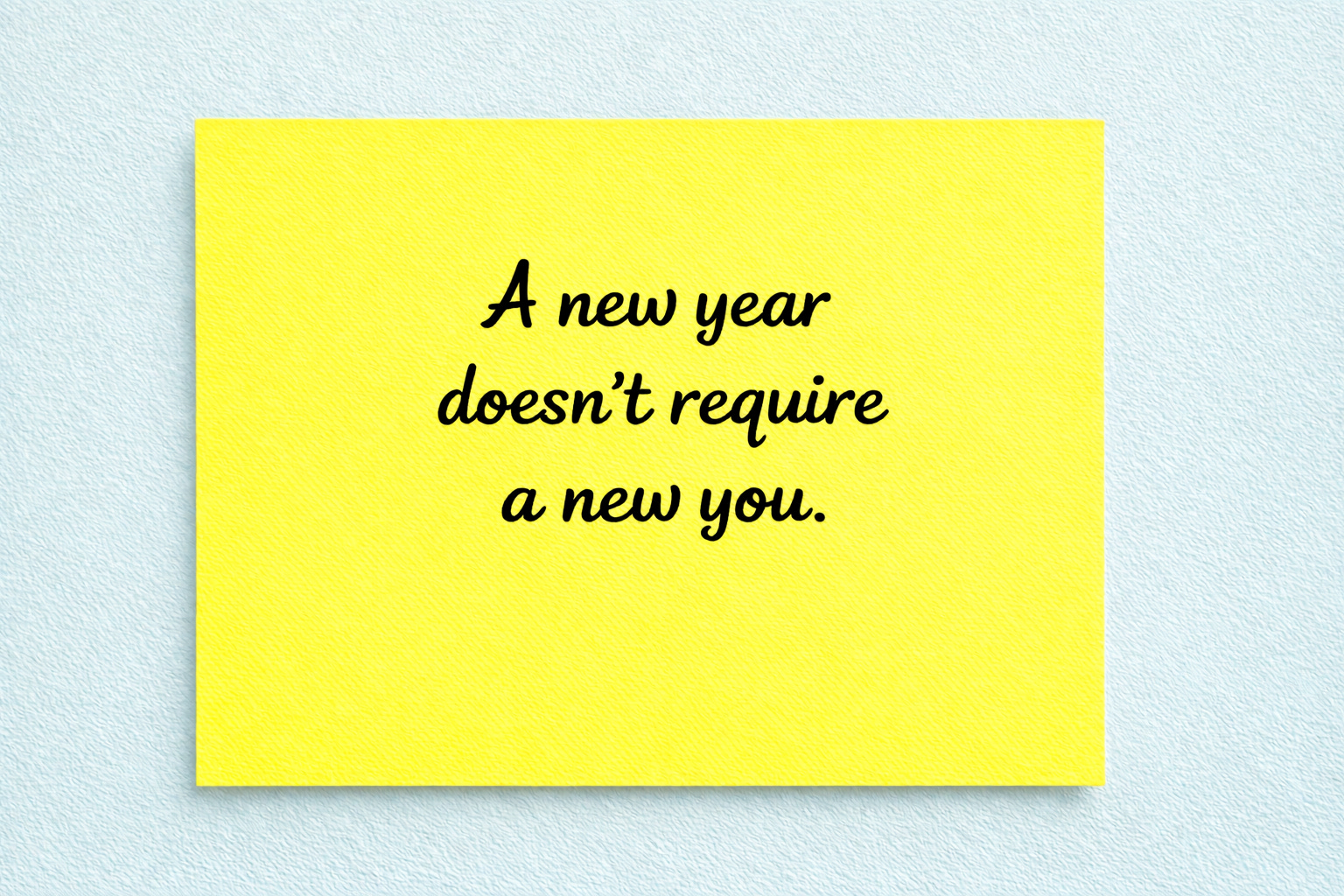
Late December carries a particular tone. The air feels reflective. Conversations soften. Time stretches in odd ways. And almost everywhere you look, there is an invitation to reset. New year. New habits. New focus. New you.
Nonetheless, the language of reset often assumes readiness. It assumes energy. It assumes that whatever came before reached a clean stopping point. Many lives do not work that way. Grief does not check the calendar. Fatigue does not wrap itself up by December thirty first. Change does not pause out of courtesy.
As a result, the call to start fresh can quietly backfire.
When hope begins to rush you
The idea of a reset often wears the costume of hope. Clean slate. Blank page. A sense that you can finally put things behind you. On the surface, this sounds generous.
However, hope can carry pressure when it arrives with a timeline.
You notice it in subtle ways. The urge to declare closure even when something still hurts. The pressure to define intentions before you feel steady. The sense that carrying anything old into January counts as a failure of mindset.
Regardless of intention, this framing suggests that staying with unfinished feelings equals stagnation. It implies that rest equals delay. It treats continuity as weakness.

Performing readiness when you are not there yet
There is a specific exhaustion that comes from acting prepared when you are not. You smile at conversations about goals. You nod along to plans. You make vague promises to yourself that you will get serious soon.
Inside, something tightens.
This is where growth starts to feel like a performance. You perform optimism. You perform motivation. You perform closure. None of it quite fits, but it passes well enough in public.
As a result, the reset stops offering relief. It begins to demand output.
You might notice a quiet guilt. You did not fail exactly, but you also did not reset correctly. You carried sadness forward. You brought doubt with you. You entered the new year with questions instead of clarity.
Emotional hygiene shouldn’t start with a fire alarm. It usually begins much earlier, in quieter moments that never make it into January language. Yet the new year often skips that part. It arrives loud. Urgent. Insistent. Clean everything now.
Carrying things forward as an act of care
There is a quieter truth that rarely makes it into new year messaging. Healing does not require erasure. Sometimes it asks for continuity.
You can step into a new year while still holding grief. You can move forward while uncertainty stays close. You can grow without immediate resolution.
Therefore, carrying something forward does not signal failure. It can signal honesty.
Some experiences need time without pressure. Some emotions need space without deadlines. Some chapters refuse to close simply because the date changed.
When you allow that reality, your system often softens. There is less internal arguing. Less forcing. Less pretending.
When care starts to feel like another task
Reset culture often pairs with another quiet pressure. Optimize everything. Reflect correctly. Improve strategically. Even rest can turn into a project.
You schedule resets. You plan resets. You track resets. Before long, care begins to resemble labor.
At that point, the nervous system does not feel supported. It feels managed.
When self-care starts to feel like work, that information matters. It does not mean you resist growth. It might mean you need less instruction and more permission.
Permission to pause. Permission to carry. Permission to move slowly.
The myth of the clean slate
The clean slate sounds appealing because it promises relief without complexity. Start over. Forget the mess. Begin again.
Real life rarely grants that simplicity.
Most people carry stories forward. Lessons. Wounds. Joy. Fatigue. Love. Loss. These do not disappear at midnight. They weave into whatever comes next.
Trying to wipe the slate clean often feels tidy in theory. In practice, it asks you to set things down before you are done holding them. You rush past emotions that want acknowledgment. You label continuity as stuckness.
However, continuity can be stability. It can be a bridge. It can be a form of respect for what you survived.
Stagnation is not the same as integration
There is a fear beneath much of this. The fear of staying the same. The fear of wasting time. The fear that rest equals regression.
But there is a difference between stagnation and integration.
Stagnation feels numb. Integration feels alive, even when it moves slowly. Integration allows experience to settle into understanding. You notice reactions changing before you consciously name why.
If you feel tired but thoughtful, heavy but present, uncertain but aware, that is not stagnation. That is processing.
Processing does not photograph well. It does not announce milestones. It rarely fits into goal trackers. Nonetheless, it shapes who you become.
Why January can feel especially tender
The turn of the year often amplifies everything already present. Quiet feels louder. Loss feels sharper. Comparison feels closer.
This happens because reflection opens doors. Memory surfaces. Expectations float around.
For people who carry unresolved emotion, January can feel like a spotlight rather than a fresh start. You see what did not resolve. You notice what still aches. You notice how often your mind jumps ahead while your life stays right where it is. Nothing about that response means you failed the year. It means you paid attention.
Letting the year meet you where you are
What if the new year did not require a version of you that feels ready. What if it could meet you exactly as you are.
You might step into January tired. You might arrive unsure. You might bring questions instead of answers.
That is allowed.
You do not owe the calendar a transformation. Nothing requires you to start over. The next decision can happen with everything else still unresolved.
Growth that respects your pace tends to last longer. Change that honors your nervous system tends to feel safer.
The permission many people quietly need
For some readers, the most helpful message this time of year is simple. You are not behind. You are not broken. You are not missing something essential.
You are carrying a life.
That life includes chapters that remain open. Feelings that need time. Lessons that continue to unfold.
Rather than asking what you will fix this year, it might help to ask what you will allow. Allow rest. Allow ambiguity. Allow continuity.
Not everything needs a reset. Some things need gentleness. Some things need patience. Some things need time without commentary.
That counts too.

One thing that grounded me this week: the weight of a coffee mug warming my hands during an ordinary afternoon.
One thing that ungrounded me: realizing a plant I talked to daily had been fake the entire time.
Your turn. What is one small thing, grounding or ungrounding, that shifted your week?
If you are new here, step into the Joydify era, your soft landing for the quiet stuff that matters.
Thanks for subscribing to Joydify and sharing a quiet moment with us. Here’s to gentle support, one check-in at a time.