

When You’re Tired of Working on Yourself
Why growth fatigue deserves rest, not another plan.
Hey, checking in, because the quiet stuff matters too. Today’s reflection: what it feels like when personal growth no longer feels hopeful, but heavy.
At some point, effort starts to blur. You read the books. You track habits. You name patterns. You pause before reactions. You ask better questions. Nonetheless, a low ache settles in. Progress exists on paper, and still, something inside feels worn thin.
This is not resistance to change. This is fatigue from constant self-focus.
For a lot of people, growth stopped being something you move through and started feeling like something you’re always supposed to be doing. Because of For many people, growth used to come in phases. Now it feels more like a permanent assignment. As a result, simply being without assessing how you’re doing can feel strangely unfamiliar. Even rest becomes a task with goals. Even insight comes with pressure. Even kindness toward yourself turns into another standard to meet.

The exhaustion nobody praises
Self-improvement earns applause. Rest rarely does. Therefore, tiredness with growth can feel shameful. You might think that gratitude should cancel the fatigue. You might believe that insight should equal relief. You might assume that commitment means endurance.
Regardless, exhaustion arrives.
It arrives after months or years of reflection. It arrives when every feeling gets labeled. It arrives when every rough edge becomes a project. You start to notice a subtle dread before check-ins with yourself. You delay journaling. You avoid prompts that once felt helpful. You tell yourself to push through.
Ironically, this is often the point when growth starts to feel like a performance. You know the language. You know the right questions. You know how to sound aware. However, awareness without rest can hollow out.
When self-care loses its softness
Care began as support. Over time, it picked up rules. Drink this. Track that. Notice everything. Optimize mood. Fix sleep. Improve boundaries. Heal faster.
As a result, when self-care starts to feel like work, people rarely question the system. They question themselves. They wonder why they cannot keep up with practices that once helped. They feel guilt for avoidance. They push harder.
This is how well-intentioned care turns into quiet pressure.
Care asks for presence. Work asks for output. When care mimics work, your nervous system stays alert. It does not soften. It waits for evaluation. It braces.
Therefore, fatigue does not signal failure. It signals saturation.
Culture praises effort. Therefore, stopping feels like backsliding. Choosing ease feels irresponsible. Admitting tiredness feels ungrateful.
Yet virtue without mercy burns people out.
Always in process, never at rest
There is a particular tiredness that comes from never feeling finished. Every insight leads to another layer. Every breakthrough reveals another task. Every calm moment turns into data.
You start to live one step away from yourself. Instead of feeling, you analyze. Instead of rest, you review. Instead of relief, you plan.
Nonetheless, growth was never meant to function as a permanent state. Growth happens in cycles. Expansion needs pause. Insight needs integration. Without pause, even healing can exhaust.
This is where a gentle truth matters. You can be healed without feeling healed. Integration takes time. Safety takes repetition. Relief does not arrive on command.
The virtue trap
Culture praises effort. Therefore, stopping feels like backsliding. Choosing ease feels irresponsible. Admitting tiredness feels ungrateful.
Yet virtue without mercy burns people out.
Many readers of this likely care deeply. They want to show up well. They want to reduce harm. They want to live with intention. As a result, they monitor themselves closely.
However, constant self-monitoring drains. It keeps attention turned inward. It leaves little room for play, surprise, or simple presence. Over time, the body learns that awareness equals work.
This is not a moral flaw. This is a human limit.
What rest from growth can look like
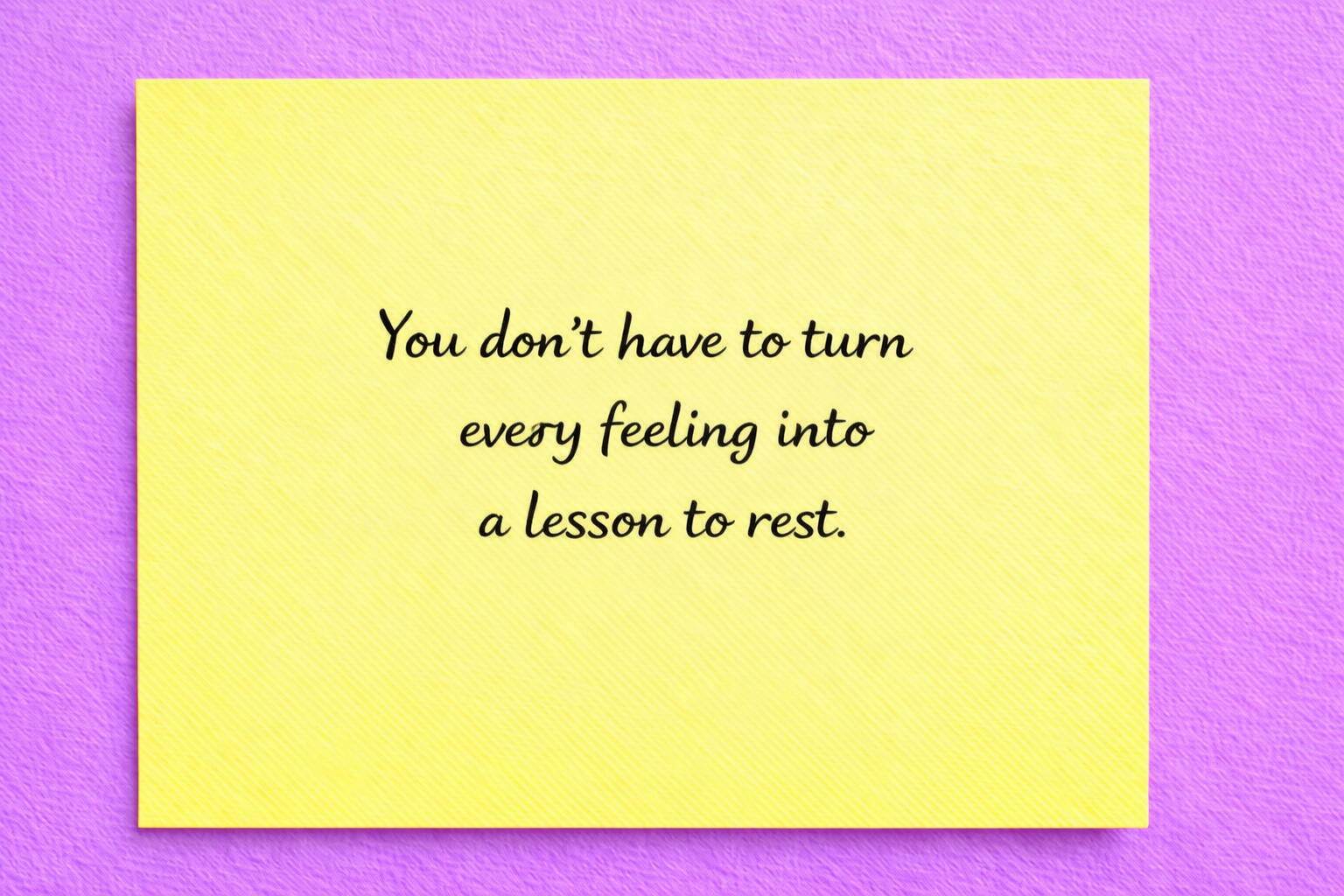
Rest does not mean apathy. Rest means release from constant evaluation. It means time where nothing needs improvement. It means moments where feelings pass without commentary.
Practically, rest might look quiet. Fewer tools. Less tracking. More unstructured time. Activities chosen for pleasure rather than progress.
Emotionally, rest might feel strange at first. Without goals, there can be disorientation. Without reflection, there can be anxiety. This does not mean rest fails. It means your system adjusts.
Therefore, go slowly. Let space exist. Let silence stand without meaning.
Permission without quitting
Many people fear that rest equals abandonment. They worry that pause will undo hard-earned change. In truth, rest protects change.
Integration happens when insight meets lived experience. This requires space. It requires trust. It requires moments where growth fades into the background and life takes the lead.
You do not need to quit caring. You do not need to discard tools. You simply need intervals where you are not a project.
Care can exist without progress. Worth does not depend on momentum.
The relief of being ordinary
There is comfort in ordinariness. Dishes. Walks. Laughter without lessons. Days without breakthroughs. These moments anchor.
Often, the nervous system heals through repetition of safety, not through insight. Calm builds through consistency, not constant analysis.
Therefore, allow yourself to be unremarkable for a while. Let growth rest. Let life happen without annotation.
This is not stagnation. This is recovery.
Tiredness carries information. It speaks about pace. It speaks about load. It points to things you’ve been needing for a while.
Listening to tiredness
Tiredness carries information. It speaks about pace. It speaks about load. It points to things you’ve been needing for a while.
Instead of arguing with it, listen. Ask what it protects. Ask what it asks for. Often, the answer is simple. Less effort. More kindness. Fewer expectations.
This listening does not require action plans. It requires respect.
Coming back gently
Eventually, curiosity returns. Insight feels lighter. Tools feel optional rather than required. Growth comes back, just slower.
When that happens, you can choose differently. You can let care stay soft. You can stop before strain. You can notice when effort tips into pressure.
Growth can serve life rather than consume it.
A quieter way to tell how you’re doing
Sometimes there isn’t a big, clear sign that things are okay. Sometimes it looks like neutrality. Sometimes it looks like boredom. Sometimes it looks like peace without excitement.
Trust these states. They do not need improvement.
You are allowed to pause without justification. You are allowed to rest from self-focus. You are allowed to exist without fixing.
Growth will wait. It always does.
One thing that grounded me this week: binge-watching all episodes of Landman.
One thing that ungrounded me: a grocery cart with one wheel that refused to cooperate, no matter how politely I pushed.
Your turn. What is one small thing, grounding or ungrounding, that shifted your week?
If you are new here, step into the Joydify era, your soft landing for the quiet stuff that matters.
Thanks for subscribing to Joydify and sharing a quiet moment with us. Here’s to gentle support, one check-in at a time.